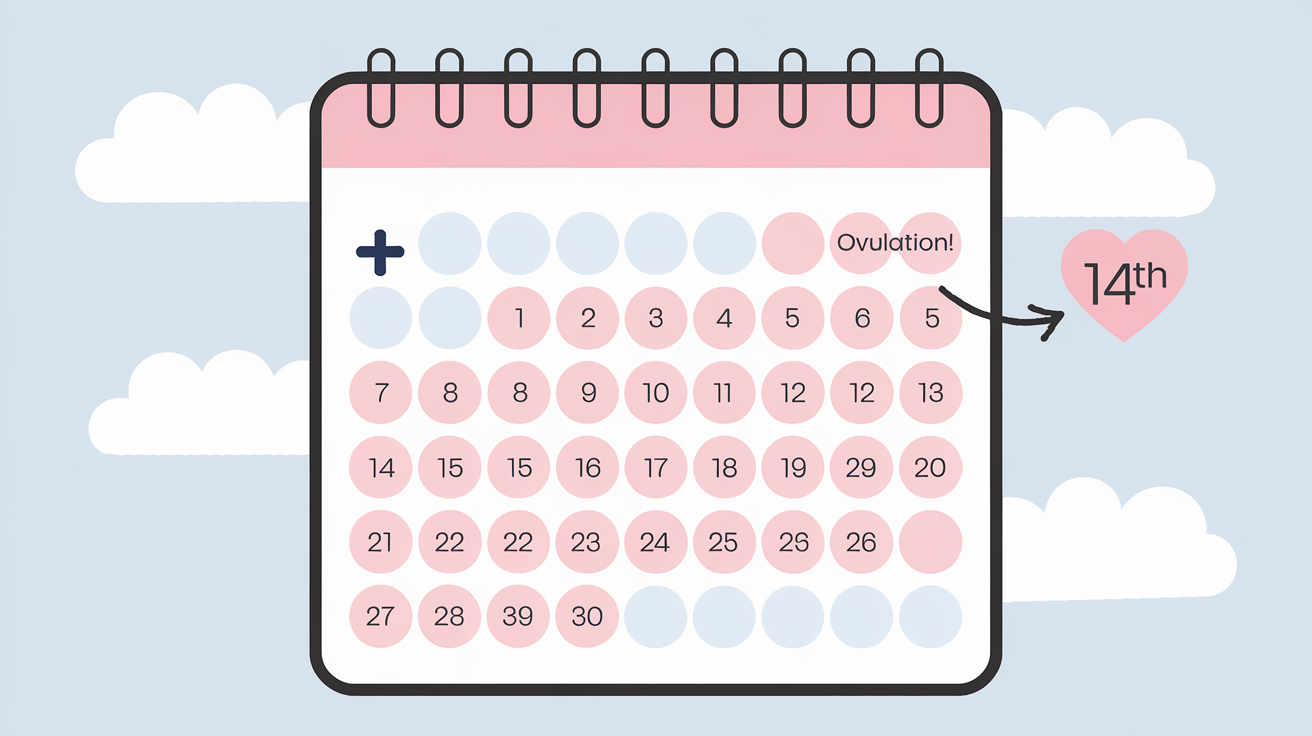
An ovulation calendar helps you track your menstrual cycle and predict your most fertile days. It’s a practical tool if you’re trying to conceive, offering a clearer picture of when ovulation occurs. In this article, we’ll teach you how to use an ovulation calendar, manage irregular periods, and understand your menstrual cycle. You’ll also learn to identify your fertile window and other ovulation signs to maximize your chances of conception.
Key Takeaways
- To use an ovulation calendar effectively, track your last menstrual period and cycle length for accurate predictions of your fertile days.
- Monitoring changes in cervical mucus and tracking basal body temperature can help identify ovulation, especially for women with irregular cycles.
- Maximizing conception chances involves timing intercourse around your fertile window and maintaining a healthy lifestyle while monitoring ovulation signs.
How to Use an Ovulation Calendar

An ovulation calendar is a straightforward yet powerful fertility tool. Begin by identifying the start date of your last menstrual period, which serves as the reference for calculating your cycle length and predicting future ovulation date.
Then, determine your cycle length by counting the days from the first day of one period to the first day of the next period. With this information and the date of your last menstrual period, use an ovulation calculator to estimate your fertile dates for the next four months.
An ovulation calendar can significantly enhance your ability to pinpoint your most fertile days. However, predicting ovulation with an irregular cycle can be challenging. The next section will address how to manage irregular periods.
Dealing with Irregular Periods
Irregular periods complicate ovulation tracking but don’t make it impossible. One effective method is monitoring cervical mucus, which becomes more abundant and elastic, resembling egg whites, as ovulation approaches.
Another method is tracking your basal body temperature (BBT). Taking your temperature every morning before getting out of bed can help detect a slight increase, signaling that ovulation rise has occurred. This approach is particularly useful for women with irregular cycles.
Ovulation predictor kits (OPKs) can also be beneficial. These kits detect the luteinizing hormone (LH) surge that precedes ovulation. Daily urine tests can help pinpoint ovulation dates more accurately, even with irregular periods. Combining these methods offers a comprehensive approach to tracking fertile days.
Understanding Your Menstrual Cycle

Accurate ovulation prediction requires a solid understanding of your menstrual cycle. Regulated by hormones, estrogen triggers ovulation, while progesterone prepares the uterus for potential pregnancy. Typically, ovulation occurs about 14 days before your next menstrual period.
Tracking your typical menstrual cycle for at least six months helps you understand your average cycle length and variations. Each woman’s cycle is unique, and factors like stress, illness, and lifestyle can cause fluctuations, affecting ovulation timing. Regular monitoring is crucial.
Changes in cervical mucus are key indicators of your fertile window. As ovulation approaches, mucus becomes thinner and clearer, aiding sperm travel and fertilization. Understanding these changes helps you identify your most fertile days and optimize pregnancy chances.
Identifying Your Fertile Window

Pinpointing your fertile window is crucial in your fertility journey. Ovulation typically occurs 10 to 16 days before your next menstrual period. For a regular 28-day cycle, this usually means ovulating around day 14.
The fertile window spans six days: five days before ovulation and the day of ovulation itself. Intercourse during this time significantly increases conception chances. Sperm can survive in the female reproductive tract for up to five days, making it advantageous to have sperm present when ovulation occurs.
An ovulation calculator can help estimate your fertile window more precisely. By inputting your cycle length and last menstrual period date, you gain a clearer picture of your most fertile days. Ovulation predictor kits can further enhance accuracy by detecting hormone surges.
Signs of Ovulation
Recognizing ovulation signs can greatly improve fertility awareness and increase conception chances. Symptoms can include tender breasts, bloating, mild pelvic pain, and changes in cervical mucus. Understanding these signs helps identify your fertile window more accurately.
Paying attention to these physical and hormonal changes helps better predict ovulation. This knowledge is particularly beneficial for women trying to get pregnant, allowing more precise timing of intercourse during the fertile window.
Next, we’ll explore specific signs, starting with changes in cervical mucus.
Changes in Cervical Mucus
Throughout your menstrual cycle, cervical mucus undergoes noticeable changes. As ovulation approaches, vaginal secretions become more abundant and elastic, resembling egg whites. This clear and slippery mucus is a key fertility indicator.
Typically, this egg-white-like cervical mucus appears three to four days before ovulation. Monitoring and recording these changes can help predict your most fertile days, especially with an irregular cycle. Understanding and observing these changes can better time intercourse for increased conception chances.
Basal Body Temperature Tracking

Tracking your basal body temperature (BBT) is another effective method for detecting ovulation. A slight increase of about 0.5 to 1 degree usually indicates ovulation. Take your temperature every morning before getting out of bed and record the readings.
It may take a few months to see significant patterns, but combining BBT tracking with cervical mucus monitoring can enhance prediction accuracy, especially for irregular cycles. This holistic approach provides a clearer picture of your fertile window and improves conception chances.
Using Ovulation Predictor Kits
Ovulation predictor kit (OPKs) are valuable for pinpointing ovulation. These kits detect the luteinizing hormone (LH) surge signaling imminent ovulation. Daily urine tests help identify this LH surge and predict your most fertile days with greater precision.
OPKs are especially useful for women with irregular periods, providing a reliable way to detect hormone surges and plan intercourse accordingly. Using these kits alongside other methods offers a comprehensive understanding of ovulation patterns and maximizes pregnancy chances.
Maximizing Chances of Conception

Timing is crucial for conception. The best time to have sex is in the days leading up to and during ovulation. Intercourse two days before or on the day of ovulation significantly boosts the likelihood of conception.
Sperm can live in the fallopian tubes for up to seven days, so regular intercourse every two to three days ensures sperm presence when ovulation occurs. Additionally, maintaining a healthy lifestyle by avoiding smoking and excessive alcohol can enhance fertility and improve conception chances.
Lifestyle changes such as achieving a healthy weight and managing stress contribute to reproductive health and increase the likelihood of getting pregnant. Combining these strategies with accurate ovulation tracking optimizes your chances of conceiving.
Additional Fertility Information
Understanding broader fertility aspects can aid your conception journey. Age is a significant factor, with fertility decreasing notably after age 35. Maintaining a healthy body weight is crucial, as both excessive and insufficient weight can cause ovulation issues.
For men, factors like low sperm count or motility can affect fertility. Avoiding smoking and excessive alcohol consumption is advisable, as these can adversely impact reproductive health. Couples trying to conceive should consult a healthcare provider for pre-pregnancy evaluations and possible treatments if needed.
Seek help for fertility issues after a year of trying to conceive for women under 35, and after six months for those over 35. Healthcare providers can offer valuable guidance and recommend specialists to address specific concerns, enhancing the chances of a successful pregnancy.
Summary
In summary, tracking ovulation is a powerful tool that can significantly increase your chances of conception. By understanding your menstrual cycle, identifying your fertile window, and recognizing signs of ovulation, you can better plan for your most fertile days. Utilizing methods like monitoring cervical mucus, tracking basal body temperature, and using ovulation predictor kits can provide a comprehensive approach to fertility awareness.
Remember, every woman’s cycle is unique, and it may take some time to identify your patterns. Stay patient and persistent, and consult with healthcare providers if you encounter challenges. With the right knowledge and tools, you can take control of your fertility journey and move closer to achieving your dream of getting pregnant.
Frequently Asked Questions
How do I use an ovulation calendar if I have irregular periods?
To effectively use an ovulation calendar with irregular periods, pay attention to changes in cervical mucus and your basal body temperature, and consider using ovulation predictor kits to pinpoint your fertile days. These methods will give you a clearer picture of your cycle and help you plan accordingly.
What are the signs that I am ovulating?
You can recognize that you’re ovulating by noticing changes in your cervical mucus, a slight rise in your basal body temperature, and symptoms like tender breasts or mild pelvic pain. Keeping track of these signs can help you better understand your cycle.
When is the best time to have sex to increase the chances of getting pregnant?
To boost your chances of getting pregnant, the best time to have sex is in the days leading up to and during ovulation. Regular intercourse every two to three days can also help!
How does age impact fertility?
Age significantly impacts fertility, especially for women, as it tends to decline after 35. It’s wise to monitor ovulation and consult a healthcare professional if you’re considering starting a family.
What lifestyle changes can improve fertility?
Making lifestyle changes like achieving a healthy weight, quitting smoking, cutting down on alcohol, and managing stress can really boost your fertility. It’s all about taking care of yourself for the best chances of conception!
🔗 Outbound Links (Trusted External Sources)
-
Mayo Clinic – Ovulation: When and How Long Does It Last?
Understand ovulation timing, signs, and how to track it medically. -
American Pregnancy Association – Ovulation Calendar
A reliable overview of how to track ovulation and improve conception chances. -
Cleveland Clinic – Ovulation Symptoms & Timing
Expert information on physical signs of ovulation and its connection to fertility. -
Fertility Friend – Ovulation Tracker App
One of the most used ovulation tracking tools available.
🔁 Inbound Links – AgnnesTreasures
-
10 Proven Fertility Tips to Enhance Your Chances of Conception
Learn science-backed ways to support fertility alongside ovulation tracking. -
Top Natural Remedies to Support Hormonal Balance
Help your cycle stay regular with these gentle, supportive remedies. -
Good Morning Messages to Brighten the TTC Journey
Encouragement and love for each day you’re waiting and hoping.




Leave a Reply